Stadiums, Arenas, and Venues

Resolved before the final whistle for venues.

Event day compresses an entire customer relationship into four hours. A gate line that runs long, a stand that runs out, a section that cannot hear the audio. Recoverable in the moment, permanent afterward.

SPORTS AND ENTERTAINMENT
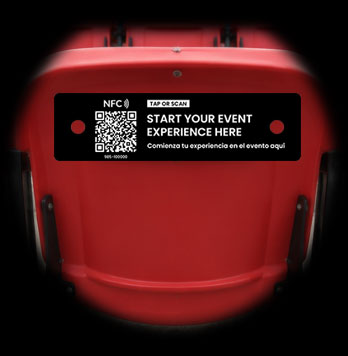
  • Seat, row, and section codes
  • Concourse video boards
  • Concession stands
  • Restroom and cleanup triggers
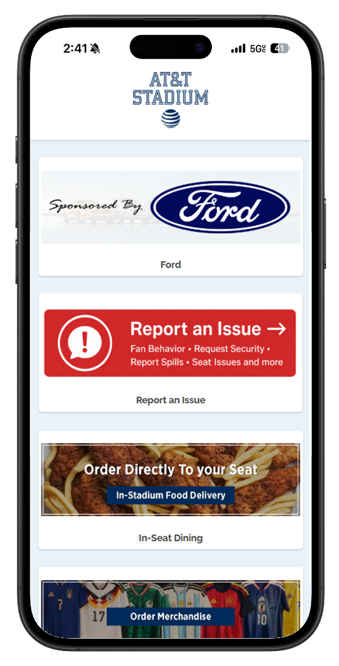
  • Discreet incident reporting
  • Premium and suite channel
  • Parking, gates, and entry
  • Post-event mobile web app

Every touchpoint routes to a named owner with a timestamp.

Where it breaks

Three things that cost you money in sports and entertainment.

01

You get one event to earn the renewal

Season ticket renewals follow how the night felt, not how the team played. The operational moments that shape that feeling are the ones you can actually control.

02

Fans will not leave their seat to complain

Only one in twenty-six unhappy customers raises it with the business. A fan who has paid for a seat is not walking to guest services during the second period.

Source: Esteban Kolsky, ThinkJar Research

03

The picture assembles after everyone has gone home

Concessionaires, security contractors, and cleaning crews each hold part of event day. Post-event debriefs are useful for next time, not for tonight.

How it works here

Capture, route, act. Configured for your operation.

  1. 01STEP 01

    Capture

    Codes at the seat, in the concourse, at concession stands, and in premium areas. A fan reports from section 214 without standing up, and event staff report from the same codes.

  2. 02STEP 02

    Route

    A disruptive behavior report routes to security with the exact section. A concession line surge routes to that stand's operator during the game, not after it.

  3. 03STEP 03

    Act and invite

    Section leads and operators resolve within the period, and the response is timestamped. After the event, every eligible attendee receives the same invitation to review.

Where we listen, and who acts

A signal nobody owns is just a notification.

Every listening point is tied to a location, and every location is tied to a named owner. That pairing is the whole mechanism.

WHERE WE LISTEN

  • Seat, row, and section codes
  • Concourse video boards
  • Concession stands
  • Restroom and cleanup triggers
  • Discreet incident reporting
  • Premium and suite channel
  • Parking, gates, and entry
  • Post-event mobile web app

Codes are dynamic. Each one carries its own location, so the report arrives already knowing where it came from.

WHO NEEDS THE SIGNAL

  • Guest services

    Seat, row, and section-level requests, so a fan never has to leave their seat to be heard

  • Security

    Disruptive behavior and safety concerns with the exact section, reported discreetly from the seat

  • Conversion and maintenance crew

    Spills, broken seats, and restroom faults with the location, during the period rather than after the event

  • Concession stand operator

    Line surge and order reports for their own stand, while there is still time to open a register

  • Premium and membership teams

    Suite and season-ticket-holder issues, tied to the account

  • Event director and venue leadership

    The whole night assembled by section and by contractor, before the next event rather than after the season

Modern stakeholder listening

The people closest to the problem are rarely the ones being asked.

VOICE OF THE EMPLOYEE

The digital suggestion box, rebuilt for real time.

Ushers, section leads, and stand operators see the line, the spill, and the incident well before guest services hears about any of it.

Give them a private channel that takes seconds to use. Employees can surface ideas, operational concerns, process breakdowns, safety issues, and recognition for a colleague, anonymously where that is enabled. Every submission routes to a named owner, carries a status, and is closed out, then rolls up into the same reporting leadership already reads.

BEYOND LEGACY TEXT-IN REPORTING

One scan. Zero unnecessary friction.

Inbound text-to-report still asks the same thing it always did: remember a number or a keyword, stop what you are doing, open a messaging app, type the issue from a blank field, then describe where you are standing. Most people do not bother.

  • A short code asks the reporter to supply the context
  • A Trigger Code already carries the location and the context

Outbound messaging stays a valid channel for follow-up and confirmation. The friction being removed is on the way in.

Operator testimonial

What this looks like on event day.

Gina Chapa, VP of Guest Experience, American Airlines Center. Recorded by Real Time Feedback Corp. and published here with permission. American Airlines Center runs the licensed platform; the deployment was not delivered by Get Real Time Feedback.

What leadership receives

The signal matters today. The pattern matters tomorrow.

Individual moments are resolved on the floor. Read together across a month, they become the management agenda for sports and entertainment.

IN THE REPORT

  • Reports by section, level, and period, so a bowl-wide average never hides one bad corner
  • Concession performance stand by stand, including the stands you do not operate
  • Restroom, spill, and seat-condition recurrence by concourse
  • Security response time held separately from service response time
  • Event-over-event comparison on the same categories, across sports, concerts, and family shows
  • Recognition clustered by section lead and by usher team

WHAT CHANGES IN THE BUSINESS

Renewals

Season ticket renewals follow how the night felt, not how the team played. The operational moments that shape that feeling are the ones you control.

Per-cap spend

A fan who gives up on a line does not come back to it later in the night. Surge reported in the second period is revenue you can still recover.

Contractor accountability

Concessionaires, security, and cleaning each hold part of event day. Response performance by contractor is what turns a debrief into a contract conversation.

Safety and liability

A spill reported from the seat above it is a cleanup. The same spill discovered by someone slipping on it is an incident report.

What matters most here

Most Relevant Capabilities for Sports and Entertainment

The full platform ships with every deployment. These are the capabilities that carry the weight in your operation.

Trigger Codes™

Guests, employees, and other stakeholders scan a code to report an issue or request assistance from exactly where they are standing.

Keyword Alerts

Additional escalation when specific safety or security terms appear in feedback.

Intelligent Routing

Every response reaches the person who can resolve it, with location and context attached.

Second Chance Alert™

Know when a guest with a prior issue returns to the property.

On-Site Insights™

Your guests and employees become the operational eyes and ears of the property.

Explore All Platform Capabilities

Feature spotlight

Second Chance Alert for sports and entertainment

Season ticket holders come back forty times a year. When a member who reported an issue scans in again, the membership team is alerted before they reach their seat.

  • Know the moment someone with prior negative feedback returns
  • Managers receive the original feedback and the prior response
  • Convert the return into a recovery moment before they leave again
SECOND CHANCE ALERT
NOW

Returning guest with prior issue

Your manager is alerted with the context needed to create a better experience while the guest is still on the property.

REAL TIME

return alerts

FULL

issue context

1:1

recovery moment

Our clients

Deployed and supported by Get Real Time Feedback.

Visitors gathered along the viewing window of a large aquarium exhibit
Georgia Aquarium logo

Georgia Aquarium

ATLANTA, GEORGIA

A high-volume attraction in our home market. Real-time guest, employee, and operational signal captured across the visit and routed to the team on the floor.

Client deployment delivered and supported by Get Real Time Feedback. The image above is a licensed aquarium photograph used to set the environment. It is not a photograph of this deployment.

REFERENCES

Additional client references, deployment detail, and reference calls are available on request as part of a procurement or evaluation process.

Request a reference

Supporting platform references

Operators who run the same platform in venues like yours.

These are deployments of the licensed platform rather than Get Real Time Feedback client engagements. They are published as evidence that the technology holds up at scale.

We have very high standards and we've been blown away with how consistently they go above and beyond our expectations.

Gina Chapa

VP of Guest Experience, American Airlines Center

Our guests and staff praised the system for being straightforward and easy to use. They provided unparalleled customer service throughout the implementation and service of our account.

David Chadwell

Vice President, Event Operations, Bridgestone Arena

The Real Time Feedback customer engagement tool is a powerful way to keep a finger on the pulse of the customer experience. Highly recommended.

Derek Smith

Associate General Manager, Nationwide Arena

Run your own numbers

What is silence costing you?

Enter five numbers you already know. The model applies published research coefficients to your own inputs and returns a conservative range. Every figure below belongs to you, not to us.

2540,000
$5$500
$200$25,000
1.05.0
1%25%

YOUR ESTIMATE

Enter your numbers to see your estimate.

Move any slider, or type a value into any field. Nothing is calculated and no figure is shown until you do. Every result is a conservative range built from your own inputs.

This model applies published third-party research coefficients to the figures you entered. It is an illustrative estimate of exposure, not a projection of results from Get Real Time Feedback. Complaint rate: Esteban Kolsky, ThinkJar Research. Word-of-mouth coefficient: nine people told, 50 percent deterred. Defection band: 25 to 50 percent of silent detractors. Rating-to-revenue coefficient: Michael Luca, Harvard Business School, derived from independent restaurants and applied here as a directional indicator.

Walk me through what to do about it

Move any slider to build your analysis first.

Know. Now.

Run your numbers, or book thirty minutes and we will walk your leadership through the platform and the ROI model for sports and entertainment.