Arrival, parking & wayfinding
Capture friction before the patient reaches registration, including parking access, signage and navigation.
Create an easy, real-time communication channel for patients, families and frontline teams. Route non-clinical concerns, recognize great service, and improve the environment of care while there is still time to help.
The strongest real-time use cases are physical moments with a clear operating owner, a measurable response expectation and a meaningful customer, member, resident, patient, student or guest outcome.
Capture friction before the patient reaches registration, including parking access, signage and navigation.
Identify long waits, unclear expectations and front-desk communication gaps before frustration escalates.
Give patients and families a discreet channel for non-clinical comfort, communication and service concerns.
Route restroom, room and public-area cleanliness issues directly to the appropriate operational owner.
Capture temperature, lighting, noise, seating and environmental concerns with precise location context.
Surface service issues that shape the overall experience even when clinical care is strong.
HCAHPS measures what patients remember after the stay. Real-time listening helps hospital teams identify service needs, communicate, and act during the encounter. It is a separate operational channel, not a substitute for HCAHPS, clinical systems, nurse-call systems, or emergencies.
Share concerns about communication, comfort, courtesy, access and navigation without searching for an administrator.
Collect positive feedback and employee recognition, not only complaints, and identify service practices worth repeating.
Direct facilities, food, transport, environmental services and experience reports to the right non-clinical owner.
Configure bin-level QR reporting for missing supplies, PAR replenishment, stockouts or substitution requests, with ownership and a record of follow-up.
Monitor participation, acknowledgment, closure, themes and repeat issues by unit or site to guide improvement.
Avoid collecting protected medical details in general feedback forms. Apply approved privacy, security and clinical escalation workflows.
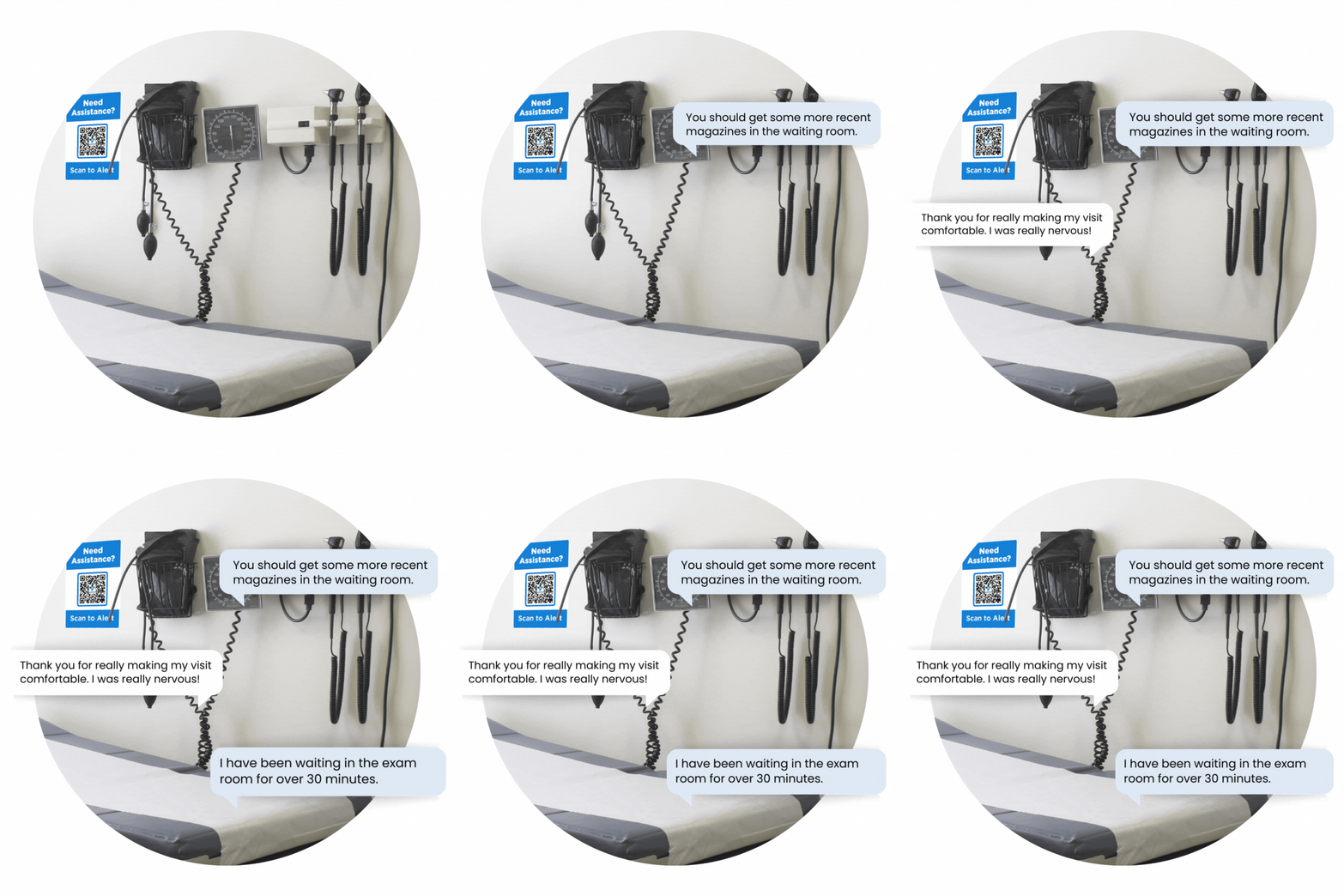
Patient and family feedback can be captured at waiting rooms, service areas and other non-clinical touchpoints.
Send EVS, facilities, parking, food-service and experience issues to the team that can act, with acknowledgement and closure.
Escalate high-priority experience terms and recurring service issues for faster management attention.
Centralize review activity and understand the themes that influence trust, recommendation and provider selection.
Summarize recurring experience issues across departments, facilities, shifts and categories.
Support compliant follow-up, appointment communication and experience requests within the organization’s approved workflow.
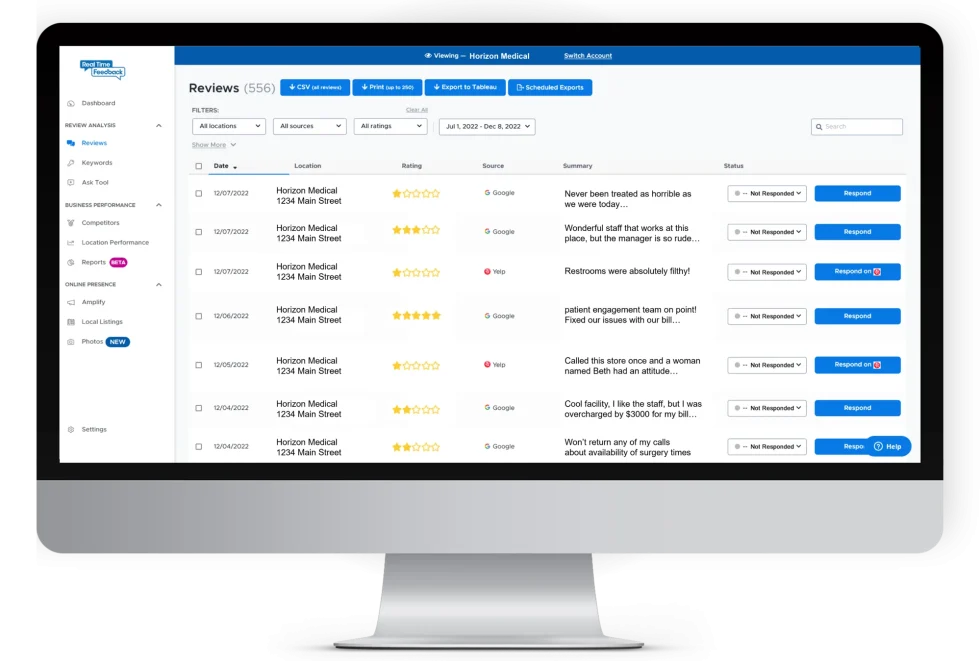
Patients increasingly encounter your digital reputation before they encounter your care team. We can review rating strength, review recency, response consistency and recurring experience themes across the public platforms that influence patient trust.
Contact us for a complimentary reputation reportHCAHPS is administered to sampled adult patients after discharge. Get Real Time Feedback should be configured as a complementary non-clinical experience and operations channel, not an emergency or clinical-care reporting system.
CMS administers HCAHPS after discharge, creating a natural gap between the in-stay recovery opportunity and the later standardized measure.
Use live operational signals to improve responsiveness, cleanliness, communication and other experience drivers while action is still possible.
Keep clinical care, emergency reporting and protected-health-information workflows separate from the non-clinical service-recovery use case.
Map the highest-value listening points, operating owners, response expectations and reputation opportunities for your environment.